
Vapor Barrier Installation Raleigh NC: Costs, Crawl Space Warning Signs, Process, and When You Need Moisture Protection
Vapor barrier installation Raleigh NC homeowners can trust starts with understanding what moisture is doing under the home. A crawl space may look like an unused area, but it can affect the entire house. When moisture rises from the ground, enters through foundation walls, or stays trapped under the floor system, it can create musty odors, mold concerns, wood rot, damaged insulation, pest activity, and poor indoor air quality.
A vapor barrier helps reduce ground moisture vapor from entering a crawl space or basement. It is typically installed across the floor and, when appropriate, extended up foundation walls to create a cleaner moisture-control layer. For many Raleigh-area homes, especially those with crawl spaces, clay soil, heavy rain exposure, poor drainage, or recurring humidity, vapor barrier installation can be an important part of protecting the home.
However, a vapor barrier is not the same as waterproofing. If water is actively entering the crawl space, basement, or foundation area, that water needs to be diagnosed before it is covered. A vapor barrier can help control moisture vapor, but it should not be used to hide standing water, foundation water intrusion, failed drainage, or a sump station problem.
Raleigh Waterproofing Inc. helps homeowners, builders, and commercial property owners with vapor barriers, sealed crawl spaces, crawl space repair, water intrusion repair, sump stations, interior drains, French drains, basement waterproofing, foundation waterproofing repair, waterproofing excavations, yard drainage, new construction waterproofing, and professional problem diagnosis. Established in 2001 by David Hawkins II, Raleigh Waterproofing Inc. is built on honest advice, quality service, expert support, customer satisfaction, and the belief that “You haven’t seen expensive until you hire an amateur.”
If your crawl space smells musty, has visible moisture, shows wood damage, or has a damaged liner, call 919-877-9969 or request a free estimate from Raleigh Waterproofing Inc.
What Is a Vapor Barrier?
A vapor barrier is a moisture-control material installed to reduce the movement of moisture vapor from the ground into a crawl space, basement, or enclosed area. In crawl spaces, it is usually placed over exposed soil and sealed at seams and edges to help reduce dampness and improve the condition of the space.
A vapor barrier may help protect against:
- Ground moisture vapor
- Damp crawl space soil
- Musty odors
- Mold-supporting conditions
- Wood rot risk
- Damaged insulation
- Rusted metal components
- Pest-friendly moisture
- Humidity moving into the home
- Dirty or muddy crawl space conditions
- Reduced indoor comfort
- Moisture-related foundation concerns
A proper vapor barrier installation is not just rolling plastic across the ground. The material, seams, edges, wall coverage, drainage conditions, and existing water issues all matter.
Vapor Barrier Installation Raleigh NC: Why It Matters
Vapor barrier installation Raleigh NC homeowners schedule early can help reduce moisture exposure under the home. This matters because crawl space air can influence the living space above. When the crawl space is damp, musty, or mold-prone, the home may feel less comfortable and harder to protect.
Moisture under the home can affect:
- Floor framing
- Floor insulation
- HVAC ducts
- Plumbing supports
- Electrical components
- Foundation walls
- Indoor air quality
- Energy efficiency
- Stored items
- Home resale confidence
- Long-term repair costs
A vapor barrier can be part of a healthier crawl space plan, but it works best when the water source is properly diagnosed first. If the crawl space has active water intrusion, standing water, or foundation seepage, Raleigh Waterproofing Inc. may recommend drainage, a sump station, sealed crawl space work, or water intrusion repair before or along with vapor barrier service.
Common Signs You May Need a Vapor Barrier
Many homeowners first notice crawl space moisture through smell, soft floors, high humidity, or an inspection report. Others discover the problem while selling a home, remodeling, replacing insulation, or dealing with pests.
Common warning signs include:
- Musty odor inside the home
- Damp crawl space soil
- Standing water after rain
- Mud or silt under the home
- Mold-like growth on framing
- Wet or sagging insulation
- Condensation on ducts or pipes
- Soft or uneven floors
- Rust on metal components
- Pest activity
- High indoor humidity
- Efflorescence on foundation walls
- Water stains near crawl space walls
- Damaged or torn plastic liner
- Missing vapor barrier
- Old thin plastic that no longer covers the area
- Water collecting on top of the liner
- Water trapped beneath the liner
- Crawl space smells worse after rain
- Home inspection flags moisture concerns
If moisture keeps returning, do not assume a new liner alone will solve the problem. The first step is understanding whether the issue is moisture vapor, water intrusion, drainage failure, poor ventilation, or a combination.
Is Crawl Space Moisture Serious?
Crawl space moisture should be taken seriously because it can affect the structure, comfort, health, and value of the home. A damp crawl space can create conditions that support mold growth, wood decay, insulation failure, and pest activity.
Moisture may contribute to:
- Musty indoor odors
- Mold concerns
- Wood rot
- Damp floor joists
- Damaged insulation
- Rusted fasteners or metal supports
- Pest attraction
- Higher indoor humidity
- Poor energy efficiency
- Crawl space deterioration
- Foundation staining
- More expensive future repairs
The Environmental Protection Agency explains that moisture control is key to mold control. That is why homeowners should address water and humidity problems promptly instead of simply covering them up.
Vapor Barrier vs. Waterproofing: What Is the Difference?
A vapor barrier helps reduce moisture vapor from the ground. Waterproofing addresses active water intrusion, foundation seepage, drainage problems, and water entry. These services are related, but they are not the same.
| Service | What It Does | When It May Be Needed |
|---|---|---|
| Vapor barrier | Reduces ground moisture vapor | Damp soil, humidity, crawl space moisture control |
| Sealed crawl space | Helps isolate and condition the crawl space | Moisture control, comfort, energy efficiency goals |
| Interior drain | Collects water entering inside the crawl space or basement | Active water intrusion along perimeter areas |
| Sump station | Pumps collected water away | Water needs to be removed from a low area |
| French drain | Redirects groundwater or surface water | Wet yards, foundation drainage, soggy areas |
| Waterproofing excavation | Stops water from entering through exterior foundation walls | Exterior foundation water intrusion |
A vapor barrier is not a substitute for drainage. If water is pushing through the foundation, pooling under the liner, or entering after every storm, the water source needs to be corrected.
Vapor Barrier vs. Crawl Space Encapsulation
Homeowners often use the terms vapor barrier and crawl space encapsulation interchangeably, but they are not always the same.
A vapor barrier is the moisture-control layer installed over the ground and sometimes up the walls. Crawl space encapsulation is a broader system that may include vapor barrier material, sealed seams, wall coverage, insulation, drainage correction, air sealing, and dehumidification.
| Term | Meaning | What Homeowners Should Know |
|---|---|---|
| Vapor barrier | Moisture-control material installed over soil or surfaces | Often the foundation of crawl space moisture control |
| Sealed crawl space | Crawl space isolated from outside moisture and air movement | May include vapor barrier, sealing, and dehumidification |
| Crawl space encapsulation | More complete crawl space conditioning approach | May include insulation, dehumidifier, drainage, and wall coverage |
| Drainage correction | Removes active water before sealing | Important when water intrusion is present |
| Dehumidification | Controls humidity after moisture sources are addressed | Works best with proper sealing and drainage |
The right approach depends on the crawl space condition, water source, humidity level, foundation type, and long-term goals.
When a Vapor Barrier Alone Is Not Enough
A vapor barrier is helpful for ground moisture vapor, but it should not be treated as a cure for every crawl space or basement problem. If water is actively entering the foundation, collecting under the liner, or flowing across the crawl space, the home may need waterproofing or drainage work first.
A vapor barrier alone may not be enough when:
- Water is standing in the crawl space
- Water enters through foundation walls
- Water collects under the plastic
- Water pools on top of the liner
- Efflorescence appears on the foundation walls
- Crawl space soil stays muddy after rain
- Downspouts drain too close to the home
- Yard grading sends water toward the foundation
- Interior drains are needed
- A sump station is needed
- Foundation cracks are leaking
- The crawl space has rotten wood
- Humidity remains high after basic sealing
Raleigh Waterproofing Inc. can diagnose whether the home needs vapor barrier installation, sealed crawl space service, sump stations, interior drains, French drains, water intrusion repair, foundation waterproofing, or problem diagnosis before installing a liner.
How a Professional Vapor Barrier System Works
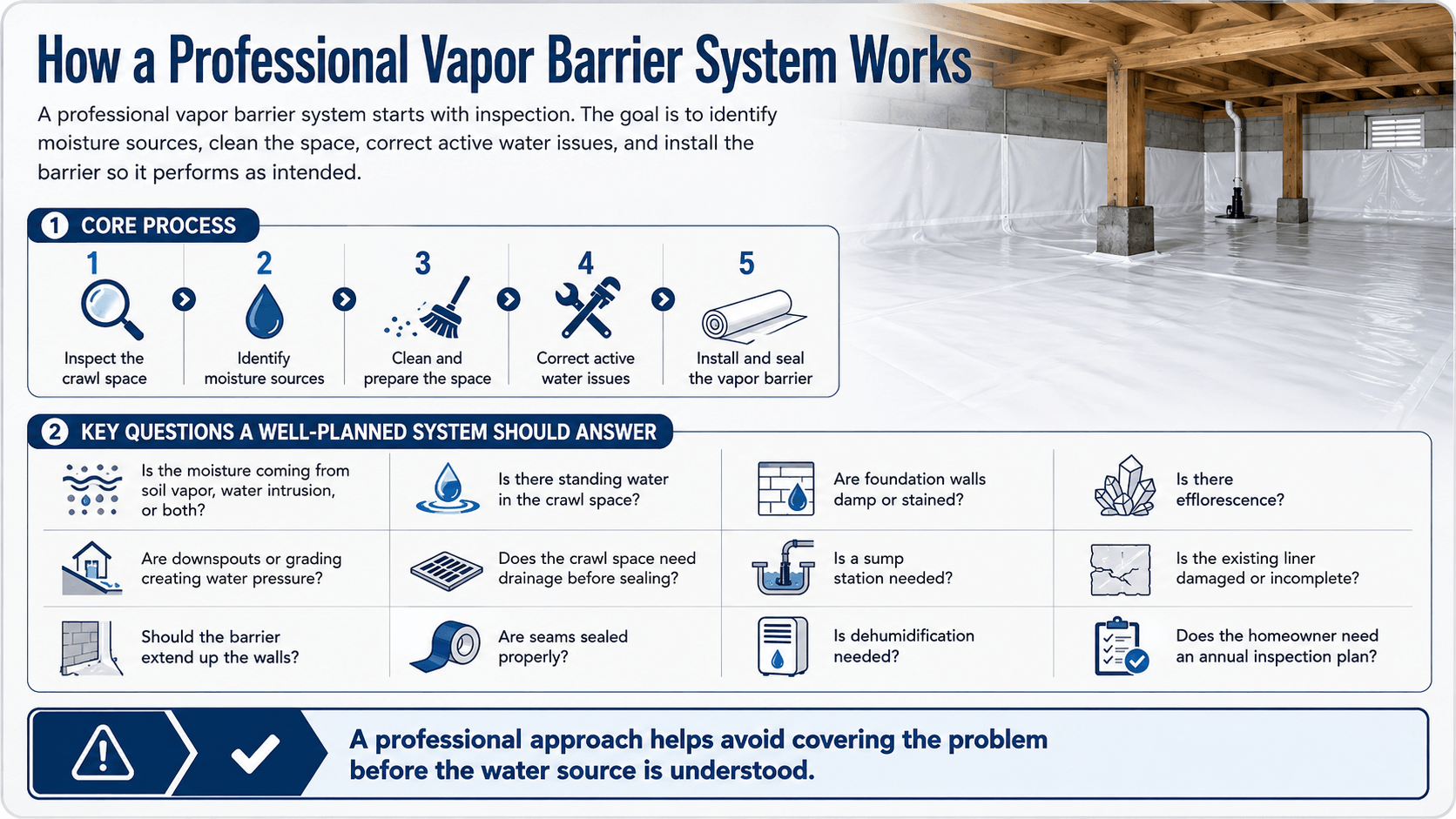
A professional vapor barrier system starts with inspection. The goal is to identify moisture sources, clean the space, correct active water issues, and install the barrier so it performs as intended.
A well-planned system should answer these questions:
- Is the moisture coming from soil vapor, water intrusion, or both?
- Is there standing water in the crawl space?
- Are foundation walls damp or stained?
- Is there efflorescence?
- Are downspouts or grading creating water pressure?
- Does the crawl space need drainage before sealing?
- Is a sump station needed?
- Is the existing liner damaged or incomplete?
- Should the barrier extend up the walls?
- Are seams sealed properly?
- Is dehumidification needed?
- Does the homeowner need an annual inspection plan?
A professional approach helps avoid covering the problem before the water source is understood.
Vapor Barrier Installation Process at Raleigh Waterproofing Inc.
Vapor barrier installation Raleigh NC service should begin with a crawl space or basement evaluation. Raleigh Waterproofing Inc. reviews the moisture conditions, checks for water intrusion, inspects drainage concerns, and recommends a plan based on the property.
A typical process may include:
- Moisture problem review
The team asks when odors, dampness, water, or humidity appear and whether the issue changes after rain.
Crawl space or basement inspection
The inspection looks for standing water, mud, staining, mold-like growth, wood damage, wet insulation, foundation seepage, and damaged liners.
Drainage and water intrusion review
The team checks whether active water needs to be handled with drainage, sump stations, French drains, or foundation waterproofing before installing the barrier.
Cleanup and preparation
Debris, old damaged liner, and obvious site issues may need to be addressed so the new barrier can be installed properly.
Barrier placement
The vapor barrier material is installed across the crawl space floor or designated area with careful coverage.
Seam and edge sealing
Seams, overlaps, edges, and penetrations are sealed as needed to reduce moisture movement.
Wall coverage when appropriate
Depending on the system design, material may extend up walls or piers for a more complete moisture-control approach.
Final inspection and guidance
The installation is reviewed, and the homeowner is given practical advice on maintenance, warning signs, and future inspections.
The right installation protects the home better than a thin, loose liner that moves, tears, or traps water.
How Much Does Vapor Barrier Installation Cost in Raleigh NC?
Vapor barrier installation cost in Raleigh NC depends on crawl space size, access, material thickness, moisture conditions, cleanup needs, drainage issues, wall coverage, seam sealing, dehumidification, insulation, and whether active water intrusion must be addressed first.
Common cost factors include:
| Cost Factor | Why It Matters | What Homeowners Should Know |
|---|---|---|
| Crawl space size | Larger areas require more material and labor | Accurate measurement matters |
| Crawl space access | Tight or difficult access can affect labor | Low crawl spaces need careful planning |
| Existing moisture | Standing water or mud may need correction first | Active water should not be covered |
| Material quality | Durable barriers resist tears and wear better | Thin plastic may not perform long term |
| Seam sealing | Seams and edges affect performance | Proper sealing improves moisture control |
| Wall coverage | Extending material up walls adds protection | Recommended based on site conditions |
| Drainage needs | Interior drains or sump stations may be needed | Drainage may be separate from vapor barrier work |
| Related repairs | Insulation, wood repair, pest cleanup, or dehumidification may be needed | Diagnosis determines full scope |
The best way to estimate vapor barrier installation cost is to request a professional evaluation. A quote should be based on the actual crawl space condition, not just square footage.
How Long Does Vapor Barrier Installation Take?
Vapor barrier installation timelines vary based on the size of the crawl space, access, moisture level, cleanup needs, drainage requirements, and whether other repairs are needed.
| Project Type | Typical Scope | Timeline Factors |
|---|---|---|
| Basic vapor barrier replacement | Remove old liner and install new coverage | Size, access, and debris affect timing |
| Vapor barrier with wall coverage | Floor and wall areas receive barrier material | More sealing and detailing required |
| Vapor barrier with cleanup | Debris, old liner, or wet insulation must be removed | Site preparation affects schedule |
| Vapor barrier with drainage | Active water must be collected or redirected | Interior drains or sump stations may add time |
| Sealed crawl space project | Vapor barrier plus sealing, insulation, dehumidification, or drainage | Larger scope requires more planning |
| Water intrusion repair first | Foundation water source must be addressed | Timeline depends on repair plan |
Many crawl space projects take longer than a simple liner replacement because the goal is not to cover the ground. The goal is to protect the home from moisture.
Vapor Barrier Thickness and Material Quality
Not all vapor barriers are the same. A thin sheet of plastic may tear, shift, wrinkle, or fail to cover the crawl space properly. Professional vapor barrier materials are typically selected for durability, puncture resistance, coverage, and long-term performance.
Material quality matters because crawl spaces may have:
- Rough soil
- Rocks
- Piers
- Plumbing lines
- HVAC supports
- Limited access
- Foot traffic during service visits
- Moisture pressure
- Pest activity
- Old debris
- Uneven surfaces
A professional can recommend the right material and installation method based on the crawl space condition. The best option is not always the cheapest roll of plastic. It is the system that fits the moisture problem.
Vapor Barrier Installation for Crawl Spaces
Crawl spaces are one of the most common places for vapor barrier installation. Because they are below the home, moisture from soil, foundation walls, and outside air can affect the space for years before a homeowner notices.
A crawl space vapor barrier may be recommended when:
- Soil is exposed
- Existing liner is torn or missing
- Crawl space smells musty
- Insulation is damp
- Floor joists show moisture concerns
- Humidity is high
- HVAC ducts sweat
- Pest activity is present
- Mold-like growth appears
- Home inspection identifies moisture
- A sealed crawl space is planned
- The home needs better moisture control
Before installing a vapor barrier, active water intrusion should be reviewed. If the crawl space has standing water, drainage may be needed first.
Vapor Barrier Installation for Basements
Basements can also benefit from moisture-control strategies, but basement vapor barrier work should be planned carefully. Damp walls, foundation seepage, water at the wall-floor joint, and hydrostatic pressure may require waterproofing or drainage, not just a barrier.
Basement moisture concerns may include:
- Damp concrete walls
- Musty odor
- Efflorescence
- Water stains
- Finished wall moisture
- Peeling paint
- Flooring damage
- Condensation
- Basement humidity
- Water after heavy rain
A basement vapor barrier may be part of a larger plan, but water intrusion should be diagnosed first. Raleigh Waterproofing Inc. can determine whether the basement needs interior drain systems, waterproofing excavations, foundation repair, crack injection, sump stations, or another solution.
Vapor Barrier and Sealed Crawl Space Systems
A vapor barrier is often a core part of a sealed crawl space. Sealing a crawl space may include vapor barrier installation, air sealing, insulation, humidity control, drainage correction, and sometimes dehumidification.
A sealed crawl space may help with:
- Moisture control
- Musty odor reduction
- Indoor air quality support
- Energy efficiency
- Pest deterrence
- Cleaner service access
- Reduced insulation damage
- Better long-term crawl space protection
However, sealing a crawl space without addressing water intrusion can trap moisture under the liner. If water is penetrating the foundation, the crawl space should be evaluated before sealing.
Vapor Barrier and Sump Stations
A sump station may be needed when water collects in a crawl space or basement and cannot drain away by gravity. If a vapor barrier is installed over a wet crawl space without a drainage plan, water may collect beneath the liner and create hidden problems.
Sump stations may be needed when:
- Water collects in low crawl space areas
- Interior drains need a discharge point
- Water cannot daylight naturally
- Crawl space soil stays muddy
- Foundation seepage is active
- Heavy rain brings repeated water
- A sealed crawl space would trap water
- Existing pumps fail or run constantly
A sump station and vapor barrier can work together, but they solve different problems. The sump station manages collected water. The vapor barrier helps reduce moisture vapor.
Vapor Barrier and French Drains
French drains collect and redirect water. Vapor barriers reduce ground moisture vapor. When water is moving toward the home or entering around the foundation, a French drain may be needed before or alongside vapor barrier installation.
French drains may be helpful when:
- Yard water flows toward the house
- Soil stays saturated near the foundation
- Water collects around crawl space walls
- Downspouts need drainage support
- Foundation seepage is related to poor exterior drainage
- Low yard areas remain soggy
- Water needs a controlled path away from the structure
A vapor barrier can make the crawl space cleaner and drier, but exterior drainage may still be needed if water pressure continues to build around the foundation.
DIY Vapor Barrier Installation Risks
DIY vapor barrier installation may look simple, but small mistakes can create expensive problems. The biggest risk is covering active water intrusion instead of fixing it.
Common DIY risks include:
- Installing over standing water
- Covering active foundation seepage
- Using thin plastic that tears easily
- Leaving gaps at seams
- Failing to seal edges
- Skipping wall coverage when needed
- Ignoring drainage problems
- Trapping water under the liner
- Missing mold or wood damage
- Blocking access to service areas
- Failing to address downspouts or grading
- Creating a liner that moves during service visits
- Assuming a vapor barrier is waterproofing
- Delaying needed crawl space repair
Raleigh Waterproofing Inc.’s motto is worth remembering: “You haven’t seen expensive until you hire an amateur.” A professional inspection can help prevent mistakes that cost more later.
Vapor Barrier Installation for Raleigh, Cary, Apex, Durham, Garner, Knightdale, and Wake Forest
Raleigh Waterproofing Inc. serves homeowners and property owners across Raleigh and nearby communities, including Apex, Cary, Durham, Garner, Knightdale, and Wake Forest. Crawl space moisture conditions can vary by soil, lot slope, age of the home, foundation type, drainage, and past repairs.
Local homes may need vapor barrier installation because of:
- Clay-heavy soil
- Crawl space humidity
- Exposed soil
- Poor yard drainage
- Downspout discharge near the foundation
- Older crawl space liners
- Wet insulation
- Basement or crawl space seepage
- Foundation wall moisture
- Seasonal storms
- High humidity
- Sealed crawl space planning
- Home inspection findings
A local inspection matters because two homes in the same neighborhood can have very different moisture sources.
How Raleigh Waterproofing Inc. Helps Homeowners
Raleigh Waterproofing Inc. was established in May 2001 by David Hawkins II to provide quality service, expert support, and knowledge. The company provides residential and commercial waterproofing and repairs across Raleigh and surrounding areas. The team’s approach is built around honest advice, customer satisfaction, and doing the work correctly.
Homeowners choose Raleigh Waterproofing Inc. for:
- Vapor barrier installation
- Sealed crawl spaces
- Crawl space repair
- Sump stations
- Interior drain systems
- French drains
- Basement waterproofing
- Water intrusion repair
- Foundation waterproofing repair
- Waterproofing excavations
- Yard drainage
- New construction waterproofing
- Commercial waterproofing
- Problem diagnosis
- Residential repair
The goal is not to sell a one-size-fits-all liner. The goal is to understand the water and moisture problem and recommend the right protection plan.
Anonymized Examples of Vapor Barrier Installation Situations
Every home is different, but these examples show why Raleigh-area homeowners schedule vapor barrier and crawl space inspections.
A Raleigh homeowner with musty indoor odors
A homeowner noticed musty odors inside the living area after rainy weeks. The crawl space had exposed soil and old, torn plastic. Inspection helped determine whether the home needed vapor barrier replacement, drainage correction, dehumidification, or sealed crawl space service.
A Cary homeowner with water under the liner
A homeowner already had plastic in the crawl space, but water was collecting underneath it. A new vapor barrier alone would not solve the issue. The inspection needed to identify whether water intrusion, drainage failure, or a sump station was needed before resealing the space.
A Wake Forest homeowner preparing to sell
A home inspection flagged crawl space moisture and damaged liner coverage. The homeowner wanted a practical solution before listing the property. A professional evaluation helped document the crawl space condition and recommend the right moisture-control repairs.
A Durham property owner with wet insulation
A property owner noticed insulation sagging under the floor. Moisture, humidity, and ground vapor were all possible contributors. Inspection helped determine whether the project needed cleanup, vapor barrier installation, sealed crawl space service, or drainage improvements.
These examples are educational and not based on identifiable customers. Project cost, timeline, parts, warranty, and recommendations depend on the property, water source, drainage design, moisture level, and inspection results.
Schedule Vapor Barrier Installation in Raleigh NC
If your crawl space smells musty, has exposed soil, damaged plastic, standing water, damp insulation, mold concerns, or moisture that keeps returning, Raleigh Waterproofing Inc. can help you understand the next step.
Call 919-877-9969 or request a free estimate from Raleigh Waterproofing Inc.
- Request a free estimate
- Contact Raleigh Waterproofing Inc.
- Review vapor barrier service
- Learn about sealed crawl spaces
- Explore crawl space repair
- Learn about sump stations
- Review interior drain systems
- Learn about French drains
- Explore water intrusion repair
- Explore basement waterproofing
- Explore waterproofing excavations
- Review problem diagnosis
- Read more waterproofing articles
This article is for general information only. It is not a substitute for a professional waterproofing inspection. Vapor barrier installation recommendations depend on the home, crawl space condition, water source, drainage conditions, humidity level, foundation design, and inspection findings.
FAQs About Vapor Barrier Installation Raleigh NC
How do I know if I need vapor barrier installation in Raleigh NC?
You may need vapor barrier installation if your crawl space has exposed soil, musty odors, damp insulation, mold-like growth, high humidity, damaged plastic, or moisture concerns found during an inspection. If there is standing water, drainage should be diagnosed before the barrier is installed.
How much does vapor barrier installation Raleigh NC cost?
Vapor barrier installation cost depends on crawl space size, access, material quality, seam sealing, wall coverage, cleanup needs, drainage issues, and whether active water intrusion must be corrected first. A professional evaluation is the best way to estimate cost.
Is a vapor barrier the same as waterproofing?
No. A vapor barrier helps reduce moisture vapor from the ground. Waterproofing addresses active water intrusion, foundation seepage, and drainage problems. If water is entering the crawl space or basement, waterproofing or drainage may be needed before vapor barrier installation.
Can a vapor barrier stop mold?
A vapor barrier can help reduce the moisture conditions that support mold, but it does not remove existing mold or fix active water intrusion. Moisture sources should be diagnosed and corrected. The EPA explains that moisture control is key to mold control.
Does a crawl space vapor barrier need a sump pump?
Not always. A sump station may be needed if water collects in the crawl space or cannot drain away naturally. If the crawl space only has ground moisture vapor, a vapor barrier may be enough. Inspection determines the right approach.
Should I install a vapor barrier before sealing my crawl space?
A vapor barrier is usually part of a sealed crawl space plan, but active water intrusion should be addressed first. Sealing a wet crawl space can trap water under the liner and make the problem more expensive later.
How long does vapor barrier installation take?
The timeline depends on crawl space size, access, cleanup needs, moisture conditions, drainage work, wall coverage, and whether related repairs are needed. Raleigh Waterproofing Inc. can explain the expected timeline after inspecting the property.
Can I install a vapor barrier myself?
DIY installation can lead to problems if the liner is too thin, seams are not sealed, active water is covered, or drainage problems are ignored. Professional diagnosis helps prevent amateur mistakes and repeat moisture issues.
Does a vapor barrier improve indoor air quality?
A vapor barrier can support better indoor air quality by helping reduce crawl space moisture, musty odors, and mold-supporting conditions. It works best when combined with proper drainage, sealing, and humidity control when needed.
Who should I call for vapor barrier installation Raleigh NC?
Call Raleigh Waterproofing Inc. at 919-877-9969 for vapor barrier installation Raleigh NC homeowners can trust. The company helps with vapor barriers, sealed crawl spaces, crawl space repair, sump stations, interior drains, French drains, water intrusion repair, and professional problem diagnosis.
Sources
- Raleigh Waterproofing Inc.
- Raleigh Waterproofing Inc. Vapor Barrier
- Raleigh Waterproofing Inc. Contact
- Raleigh Waterproofing Inc. Free Estimates
- Raleigh Waterproofing Inc. Sealed Crawl Space
- Raleigh Waterproofing Inc. Crawl Space Repair
- Raleigh Waterproofing Inc. Sump Stations
- Raleigh Waterproofing Inc. Interior Drain
- Raleigh Waterproofing Inc. French Drains
- Raleigh Waterproofing Inc. Water Intrusion
- Raleigh Waterproofing Inc. Basement Waterproofing
- Raleigh Waterproofing Inc. Waterproofing Excavations
- Raleigh Waterproofing Inc. Problem Diagnosis
- Raleigh Waterproofing Inc. Blog
- EPA: A Brief Guide to Mold, Moisture and Your Home
- EPA: Mold Cleanup in Your Home
- International Code Council: Residential Code Information