
Water appearing on a basement wall, around a foundation crack, or beneath a crawl space does not always begin where it becomes visible. It may enter through an exterior wall, construction joint, foundation penetration, wall-floor connection, failed drainage system, or an area where surface water collects beside the building.
Raleigh Waterproofing Inc. provides professional foundation waterproofing and foundation leak repair for residential and commercial properties throughout Raleigh and the Triangle. Our team evaluates the source and path of the water before recommending an exterior waterproofing system, targeted crack repair, interior drainage, sump station, French drain, or another appropriate water-management solution.
Established in May 2001 by David Hawkins II, Raleigh Waterproofing Inc. brings more than two decades of local waterproofing experience to every evaluation. The objective is not to cover a damp spot or prescribe the same system for every building. It is to understand how water is reaching the structure and develop a scope that fits the property.
Call 919-877-9969 or request a foundation waterproofing estimate
Foundation waterproofing is the process of controlling water outside, through, or alongside a building’s foundation. Effective work begins with the water-entry path and addresses the conditions that allow water to reach the wall, joint, crack, slab edge, or below-grade space.
Depending on the property, foundation waterproofing may include:
Foundation waterproofing is not one universal product. A localized crack, deteriorated exterior wall system, overwhelmed drain, and surface-water problem require different responses. Accurate diagnosis should come before system selection.
Recurring moisture during or after rain is one of the clearest reasons to schedule an evaluation. Even without standing water, stains, mineral deposits, deteriorating finishes, or musty conditions can indicate that moisture is reaching the foundation assembly.
A single damp spot does not identify the cause by itself. Water may travel behind finishes, through masonry, along joints, or across the top of a footing before it becomes visible indoors. That is why the inspection should include the visible leak area and the exterior conditions that may be feeding it.
If the primary problem is below-grade basement moisture, review our basement waterproofing services. For water beneath a raised home, see our crawl space repair solutions.
Foundation water intrusion often involves more than one condition. Rainfall, roof runoff, soil drainage, foundation construction, site slope, aging materials, and earlier repair attempts can all affect how water moves around a building.
NC State Extension explains that clayey soils generally drain slowly because of their smaller pore spaces. However, conditions vary by property. Soil texture, compaction, grading, drainage outlets, and construction details should be evaluated at the site rather than assumed from a city or neighborhood alone.
The recommended system should match the diagnosed water source, foundation type, accessibility, and property conditions. Raleigh Waterproofing Inc. may recommend one method or a coordinated combination of solutions.
Exterior waterproofing addresses water at the outside surface of the foundation. When access and site conditions allow, the work may involve excavating beside the affected wall, cleaning and preparing the exposed surface, treating applicable cracks or penetrations, installing a compatible waterproofing system, improving drainage, and carefully backfilling the work area. This approach may be appropriate when the exterior wall or its existing waterproofing system is allowing water to enter. It can also provide direct access to wall defects and drainage conditions that cannot be reached from the interior.
A targeted injection may be appropriate when water is entering through an identifiable, accessible crack and surrounding conditions do not require a broader waterproofing system. The crack, foundation material, evidence of movement, accessibility, and water conditions must be evaluated before selecting the repair material and method. Crack injection addresses a specific leak path. It does not correct poor grading, overloaded drainage, widespread wall seepage, or structural movement. When these conditions are present, additional work or a different professional evaluation may be required.
Interior drainage manages water that reaches the building perimeter or wall-floor area. A properly designed system collects the water and directs it toward an approved outlet or sump station. This approach may be considered when exterior access is restricted or when the diagnosed conditions call for water collection inside the foundation. A sump station may be needed when gravity alone cannot move collected water to a suitable discharge point. The pump, basin, drainage connection, power source, and discharge route should function as one coordinated system.
A waterproofed wall can remain under unnecessary water exposure if runoff continues collecting beside it. Depending on the site, related improvements may include French drains, catch basins, downspout extensions, surface drains, or discharge corrections. When exterior water accumulation contributes to the problem, explore French drain installation and yard drainage solutions.
Exterior waterproofing and interior drainage perform different functions. The appropriate approach depends on where water originates, how it moves, and which parts of the foundation can be safely accessed.
Approach | Primary function | May be considered when |
Exterior waterproofing | Addresses water at the outside foundation wall. | The exterior wall or existing waterproofing system is the diagnosed entry area. |
Interior drainage | Collects and manages water at the interior perimeter. | Perimeter or wall-floor seepage requires an interior collection system. |
Crack injection | Treats an identifiable crack-related leak path. | The leak is localized and surrounding conditions do not require broader work. |
Exterior drainage | Redirects groundwater or surface runoff. | Water collects or flows toward the foundation. |
Neither an interior nor exterior approach is automatically best for every property. Some projects require one targeted repair; others require a coordinated waterproofing and drainage plan. The decision should follow the evidence found during the site evaluation.
Foundation waterproofing and structural foundation repair are related but different services. Waterproofing addresses water entry and moisture management. Structural repair addresses movement, instability, or damage affecting the building’s support system.
A leaking vertical crack may primarily require waterproofing treatment. Horizontal cracks, bowing walls, substantial displacement, widening cracks, or other signs of movement may require evaluation by an appropriately qualified structural professional before waterproofing work proceeds.
Raleigh Waterproofing Inc. focuses on diagnosing and correcting water intrusion. The evaluation should identify when observed conditions appear to extend beyond waterproofing alone, so the property owner can obtain the appropriate additional expertise.
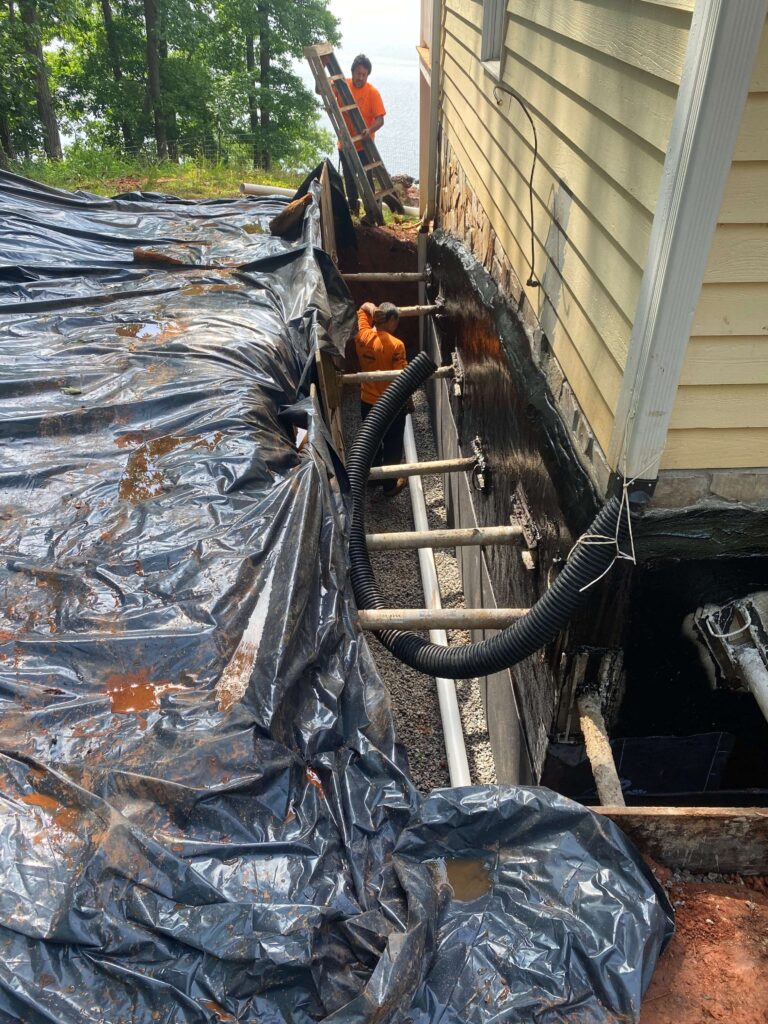
A reliable recommendation starts by connecting the visible evidence inside the building with the conditions outside and below grade. The evaluation generally includes the following steps:
We review where and when water appears, its relationship to rainfall, how long the condition has existed, and any previous repair attempts.
The evaluation considers stains, cracks, joints, penetrations, damp materials, mineral deposits, finished surfaces, and other evidence of water movement.
Grading, downspouts, low areas, drainage routes, wall access, landscaping, and discharge locations may be considered.
The team evaluates whether moisture is associated with a localized opening, exterior wall condition, perimeter seepage, surface drainage, or multiple contributing factors.
The proposal identifies the repair method and system components needed for the documented conditions.
The property owner receives a clear explanation of the proposed approach, affected areas, access needs, anticipated disruption, and next steps.
For difficult or uncertain water-entry conditions, learn more about our water-intrusion problem diagnosis.
The visible leak is only one part of the decision. The recommended system may be influenced by:
The most extensive repair is not automatically the correct repair. The objective is to match the scope to the documented water-entry conditions and the property’s construction while avoiding unnecessary work that does not address the source.
Foundation waterproofing costs vary because a targeted crack repair and an excavated exterior-wall system involve very different labor, access, materials, drainage requirements, and site restoration. An on-site evaluation is necessary before an accurate proposal can be prepared.
Be cautious with a price quoted without examining the property. A low-cost patch may not provide value if it covers the visible symptom but leaves the actual water path unchanged. A useful estimate should define the affected area, the proposed method, major system components, access requirements, and any restoration included in the scope.
Project duration depends on the repair method, foundation depth, access, weather, soil conditions, wall preparation, drainage work, and restoration requirements. A localized crack repair may require substantially less time than an exterior excavation or a coordinated drainage system. The proposal should explain the expected sequence and the factors that may change the schedule. Excavation work can be affected by weather, saturated soil, utility locations, hidden wall conditions, limited equipment access, and the amount of landscaping or hardscaping that must be removed and restored. Commercial projects may also require coordination around tenants, customers, equipment, or operating hours.
Paint, coatings, caulk, or patching compounds may change the appearance of an interior wall, but they do not necessarily correct the source of active water intrusion. If water continues reaching the foundation, it may reappear through the same opening, move to another weak point, or cause the coating to deteriorate. A surface repair can be appropriate in a correctly diagnosed application. The problem is using an interior patch as a substitute for evaluating exterior water, drainage, foundation joints, or a broader wall condition. When a previous repair leaks again, the next evaluation should look beyond the visible patch and determine what continues to supply the water.
Residential foundation leaks may affect a basement, crawl space, finished lower level, attached garage, retaining condition, or below-grade addition. The repair plan should account for occupants, stored belongings, landscaping, patios, porches, utilities, and the way the home is used. Commercial water intrusion can affect tenants, customers, equipment, inventory, mechanical areas, records, and daily operations. Commercial planning may require larger drainage capacity, phased access, safety controls, coordination with property managers, and documentation of the completed scope. Raleigh Waterproofing Inc. works with homeowners, commercial property owners, builders, developers, and other property stakeholders who need an informed response to foundation water intrusion. The same diagnosis-first principle applies: understand how water is reaching the structure before selecting a repair.
Waterproofing and drainage systems depend on clear outlets and responsible property maintenance. After the work is complete, owners should continue monitoring the areas that move water away from the building.
Maintenance cannot correct a design or installation problem, but it can help keep a properly designed system operating as intended and reveal changes around the property before they become larger issues.
The company has more than two decades of residential and commercial waterproofing experience.
Recommendations are based on the observed water path, foundation, drainage, access, and property conditions.
Capabilities include exterior waterproofing, excavation, crack injection, drainage, sump stations, and related water-management work.
The team works throughout Raleigh and surrounding Triangle communities.
Property owners should understand what is being recommended, why it fits the conditions, and what the work involves before installation begins.
Raleigh Waterproofing Inc. was established by David Hawkins II in May 2001. The company serves residential and commercial customers and has built its approach around professional assistance, honest advice, quality service, and continued customer support.
Raleigh Waterproofing Inc. provides foundation waterproofing and related water-management services in Raleigh and surrounding Triangle communities, including
Service availability and project scope depend on the property location and work required. Call 919-877-9969 to confirm service for your location.
Recurring water stains, damp foundation walls, leaking cracks, wall-floor seepage, mineral deposits, peeling coatings, or moisture that appears after rain can indicate a foundation water problem. An evaluation is needed to determine whether the source is a crack, exterior-wall condition, drainage failure, surface runoff, or another cause.
Neither method is automatically better. Exterior waterproofing addresses water at the outside foundation wall. Interior drainage collects and manages water at the building’s interior perimeter. The correct approach depends on the diagnosed water path, foundation construction, access, drainage conditions, and project objectives.
Some localized foundation cracks may be suitable for injection, depending on the crack, foundation material, movement, accessibility, and surrounding water conditions. Injection will not correct widespread seepage, poor exterior drainage, structural movement, or a failed waterproofing system elsewhere on the wall.
No. Waterproofing addresses water intrusion and moisture management. Structural repair addresses movement or instability. Bowing walls, displaced sections, widening cracks, and other signs of movement may require evaluation by an appropriately qualified structural professional in addition to waterproofing work.
Cost depends on the source of the leak, affected area, foundation depth, access, repair method, excavation, drainage, sump requirements, and restoration work. Because these variables differ substantially between properties, an on-site evaluation is the appropriate way to develop an accurate proposal.
A coating may change the appearance of an interior wall, but it does not necessarily correct the source of active water intrusion or continued water exposure outside the foundation. If the wall continues receiving water, moisture may return through another opening or cause the coating to deteriorate.
Yes. Grading, roof runoff, low areas, blocked outlets, or inadequate surface drainage can direct water toward a foundation. When exterior water accumulation contributes to the problem, drainage corrections may be recommended alongside foundation waterproofing.
No. Excavation may be appropriate when exterior wall conditions or drainage must be accessed directly, but some localized cracks or interior perimeter conditions may call for another method. The selected approach should follow the diagnosis, access limitations, and project objectives.
No. A sump pump removes water that reaches its basin; it does not automatically stop wall leaks, correct grading, repair foundation cracks, or collect water from areas that are not connected to the drainage system. It should be designed as part of the overall water-management plan.
Efflorescence is a white or light-colored mineral deposit that can remain when moisture moves through concrete or masonry and evaporates. It is evidence of moisture movement, but it does not identify the complete water source by itself. The surrounding wall, drainage, and exterior conditions still need to be evaluated.
Encapsulation and vapor barriers are designed primarily to control ground moisture vapor and separate the crawl space from exposed soil. They should not be used to conceal active liquid-water entry. Foundation leaks and standing water should be diagnosed and managed before or as part of an encapsulation plan.
Yes. Any known water intrusion should be diagnosed and corrected before installing drywall, flooring, insulation, cabinetry, or other finishes that can conceal moisture and restrict repair access. The treated area should also be monitored as appropriate before valuable finishes are installed.
Weather can affect excavation, soil stability, wall preparation, material application, drainage installation, and site restoration. Some targeted interior work may be possible during wet weather, but exterior scheduling should follow safe conditions and the installation requirements of the selected system.
Document when the leak appears, photograph the affected area during or soon after rain if it is safe to do so, and note any previous repairs. Provide access to the interior leak area and relevant exterior wall. Move stored belongings away from the affected area when practical, and identify known utilities, drains, sump equipment, or buried features.
Schedule an evaluation when moisture returns after rain, a foundation crack actively leaks, finishes are deteriorating, or previous repairs have failed. If there is significant flooding, electrical risk, wall movement, or another immediate safety concern, avoid the affected area and contact the appropriate emergency or qualified professional first.
If water is entering through or collecting around your foundation, the first step is determining where it originates and how it is reaching the building. Raleigh Waterproofing Inc. can evaluate the conditions and recommend an appropriate foundation waterproofing or water-management solution.