
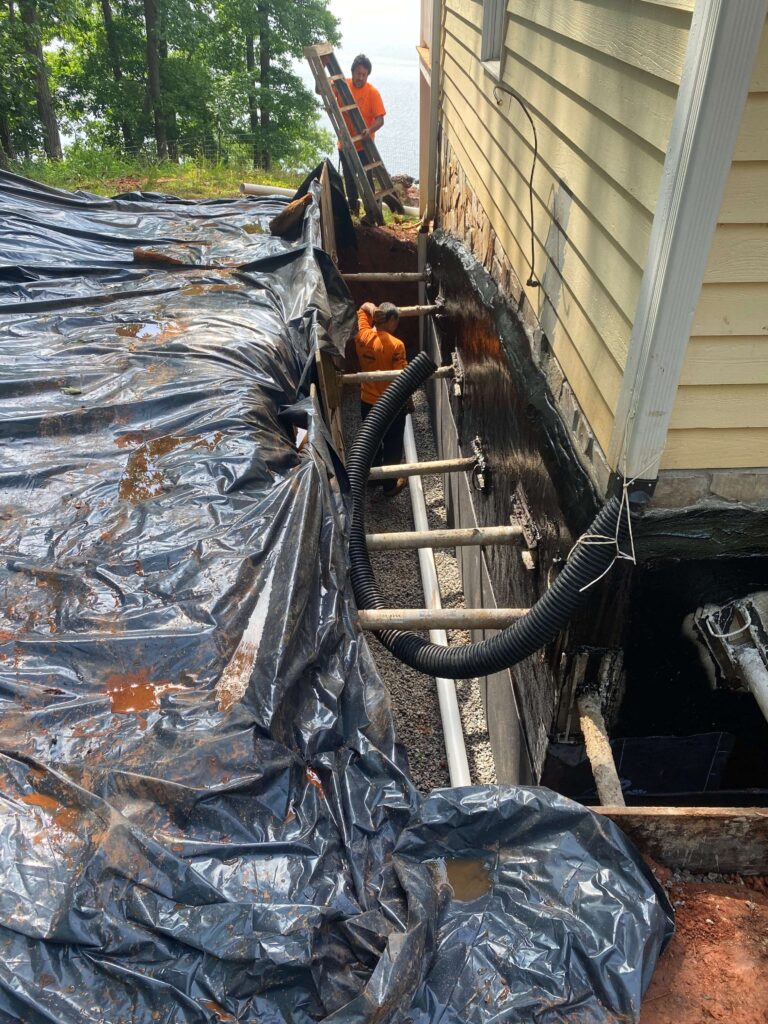
Most homeowners in Raleigh rarely step inside their crawl space—and that’s part of the problem. Moisture issues don’t announce themselves loudly at first. They creep in. Damp soil, humid air, condensation on joists, musty odors, and cupping hardwood floors are often the first clues. By the time mold growth or wood rot appears, the crawl space has already been a moisture trap for months—sometimes years.
A professionally installed crawl space vapor barrier Raleigh stops that process at the source. It separates your home from the ground’s natural moisture, stabilizes humidity, reduces mold risk, and helps protect the structural integrity of your foundation. Raleigh Waterproofing Inc, a trusted local contractor with decades of experience, installs vapor barriers designed specifically for Triangle-area homes and the region’s clay soil, heat, and humidity. Our crawl space vapor barrier Raleigh solutions ensure your home stays dry and healthy.
Use these resources for more information on our services:
- Vapor Barrier Service — https://www.raleighwaterproofinginc.com/vapor-barrier/
- Interior Drain Systems — https://www.raleighwaterproofinginc.com/interior-drain/
- All Services — https://www.raleighwaterproofinginc.com/services/
- About the Company — https://www.raleighwaterproofinginc.com/about-us/
- Contact Page — https://www.raleighwaterproofinginc.com/contact-us/
Why Crawl Spaces in Raleigh Need Vapor Barriers
Raleigh sits in a humid subtropical climate, meaning crawl spaces are exposed to high humidity nearly year-round. When warm, humid air enters a cooler crawl space, it condenses—almost like a cold drink sweating on a summer day. The EPA notes that mold only needs 48 hours of moisture to start growing on wood, insulation, or paper-based materials. (EPA)
Add in North Carolina’s clay-heavy soils, which hold moisture for long periods, and the crawl space becomes a perfect environment for chronic dampness.
A vapor barrier interrupts this cycle by covering the ground with a sealed membrane that blocks moisture from evaporating upward into floor joists and framing.
What Happens Without a Vapor Barrier?
Moisture can significantly impact your home, making a crawl space vapor barrier Raleigh installation essential for any Raleigh homeowner. Ensuring this installation can save you from costly repairs down the line.
Damp crawl spaces are more than an inconvenience. They affect air quality, comfort, and the health of the home.
1. Mold Growth & Musty Odors
The CDC and EPA both warn that mold develops quickly in damp, poorly ventilated spaces and can cause allergy-like symptoms or respiratory irritation. (CDC/EPA)
2. Structural Wood Damage
In areas like Raleigh, the importance of a crawl space vapor barrier Raleigh cannot be overstated. It’s critical for maintaining a healthy living environment.
Investing in a crawl space vapor barrier Raleigh offers peace of mind, knowing your home is protected from moisture-related issues.
Our crawl space vapor barrier Raleigh services can enhance your home’s energy efficiency by preventing moisture buildup.
High humidity feeds wood rot and insect activity. Joists, sills, and subfloor components begin to weaken over time.
3. Rising Energy Costs
Moist air requires more energy to heat and cool. Without a vapor barrier, HVAC efficiency takes a noticeable hit.
With a properly installed crawl space vapor barrier Raleigh, you can prevent rising energy costs and maintain temperature stability.
4. Sagging Floors & Foundation Shifts
Persistent moisture can warp subflooring or weaken the support system, causing bouncy or uneven floors.
5. Pest Problems
Rodents, termites, and ants thrive in damp crawl spaces. Pest-control agencies cite moisture as a key attractant for wood-destroying insects. (NCSU Extension)
A vapor barrier isn’t just about keeping the crawl space dry—it’s about protecting the entire living space above it.
What a Crawl Space Vapor Barrier Actually Does
A vapor barrier—also called a moisture barrier—is a thick, durable polyethylene liner installed across the crawl space floor and sometimes up the walls.
Its job is simple but critical:
- Block ground moisture
- Reduce humidity
- Lower mold risk
- Protect insulation
- Prevent wood rot
- Improve indoor air quality
Raleigh Waterproofing Inc uses heavy-duty, reinforced vapor barriers designed to withstand foot traffic, equipment, and long-term environmental stress.
Explore installation options:
https://www.raleighwaterproofinginc.com/vapor-barrier/
Signs You Need a Vapor Barrier Installed
Not sure if moisture is already affecting your crawl space? These symptoms are common among Raleigh homeowners:
✔ Musty or damp smells inside the home
Especially noticeable near lower levels or HVAC registers.
✔ High humidity or condensation on ductwork
Condensed water can drip onto insulation and floor framing.
✔ Soft, sagging, or cupped hardwood floors
Moisture from below can change the shape of flooring materials.
✔ Mold on joists or insulation
A visible sign that moisture has been present long enough to spread.
✔ Standing water or damp soil
Often caused by poor grading, plumbing leaks, or groundwater pressure.
✔ Rusting metal components
HVAC equipment, hangers, or fasteners may corrode faster in humid crawl spaces.
✔ Increased allergy symptoms
Up to 40% of the air in a home can come from the crawl space (stack effect). (EPA)
If one or more of these sound familiar, a vapor barrier is not just beneficial—it’s necessary.
What Makes Raleigh Waterproofing Inc Different?
Raleigh Waterproofing Inc is a licensed NC contractor with decades of experience in moisture control and foundation protection. They specialize in diagnosing root causes.
Local Expertise
Raleigh’s soil, grading patterns, and moisture levels require a specific approach. The team understands how clay soil affects water retention and how to design barriers that last in NC humidity.
Integrated Waterproofing Solutions
A vapor barrier is one piece of a larger moisture strategy. Raleigh Waterproofing Inc can combine it with:
- Interior Drain Systems
https://www.raleighwaterproofinginc.com/interior-drain/ - Foundation Repair & Stabilization
https://www.raleighwaterproofinginc.com/services/ - Crawl Space Sealing & Encapsulation
Quality Materials
The company uses reinforced liners, proper seam sealing, and fasteners designed for long-term stability.
Customer-Focused Process
Their About page emphasizes professionalism, transparency, and long-term homeowner education:
The Crawl Space Vapor Barrier Installation Process (Step-by-Step)
Every vapor barrier installation follows a structured plan:
1. Crawl Space Inspection
Technicians evaluate:
- Moisture levels
- Soil condition
- Mold or rot
- Insulation status
- Signs of pests
- Drainage patterns
- HVAC duct condition
This helps determine whether other solutions (interior drain, sump, or structural repair) should accompany the vapor barrier.
2. Moisture Source Identification
Waterproofing isn’t just blocking moisture—it’s addressing where it comes from.
Common causes include:
- Grading issues
- Foundation cracks
- Poor ventilation
- Groundwater pressure
- Plumbing leaks
EPA and FEMA both stress the importance of removing water intrusion before installing moisture-control systems. (FEMA/EPA)
3. Crawl Space Preparation
This typically includes:
- Removing debris
- Fixing or supporting sagging insulation
- Addressing mold or rot
- Repairing damaged wood
- Leveling or smoothing soil where needed
4. Vapor Barrier Installation
The barrier is laid across the crawl space floor and secured with overlapping seams. In encapsulated systems, the liner also runs up the foundation walls.
Benefits:
- Reduced air moisture
- Cleaner environment
- Better temperature stability
- Longer-lasting wood framing
5. Optional Drainage Enhancements
If the crawl space has standing water or hydrostatic pressure, the team may recommend:
- Interior drain installation
https://www.raleighwaterproofinginc.com/interior-drain/ - Sump pump installation
- Exterior drainage improvements
This prevents water from pooling under the vapor barrier.
6. Final Inspection & Homeowner Education
After installation, the team explains:
- How to monitor moisture levels
- What signs to watch for
- Whether additional improvements are recommended
You can reach the team directly for questions or estimates:
https://www.raleighwaterproofinginc.com/contact-us/
How a Vapor Barrier Protects Your Home Long-Term
1. Healthier Indoor Air
Moisture and mold stay out of living areas.
2. Preserved Structural Integrity
Wood rot and weakening floor joists are prevented.
3. Lower Energy Bills
HVAC systems work more efficiently in a drier environment.
4. Better Pest Control
Insects and rodents prefer damp, dark crawl spaces. Drying the area reduces attraction.
5. Higher Property Value
Moisture issues can kill a home sale. Buyers want dry crawl spaces.
6. Reduced Risk of Foundation Problems
Moisture and soil movement are tightly connected. Keeping the crawl space dry helps stabilize the structure.
Frequently Asked Questions (FAQs)
Q1: How thick should a crawl space vapor barrier be?
Industry standards recommend a minimum of 6 mil, but professional installations use 10–20 mil reinforced barriers for durability.
Q2: Is a vapor barrier the same as encapsulation?
No. A vapor barrier covers the ground. Encapsulation also seals walls, vents, and perimeter seams for complete moisture control.
Q3: Do all Raleigh homes need a vapor barrier?
Any home with a crawl space in a humid climate benefits from one due to moisture, soil conditions, and seasonal humidity changes.
Q4: Will a vapor barrier help with musty odors?
Yes. By blocking moisture, mold spores and odors decrease significantly.
Q5: How long does installation take?
Most installations take 3–8 hours depending on crawl space size and condition.
Q6: Do you test for mold before installing the barrier?
Raleigh Waterproofing Inc inspects for mold and wood damage and recommends remediation if needed.
Q7: Can I install a vapor barrier myself?
DIY options exist, but poorly sealed seams, thin liners, and incomplete coverage lead to continued moisture problems.
Q8: How do I schedule an inspection?
Start here:
https://www.raleighwaterproofinginc.com/contact-us/
Sources & References
1. EPA – Mold and Moisture: Mold Course, Chapter 9
Confirms that wet or damp materials should be dried within about 48 hours to prevent mold growth, supporting your statement about how quickly mold can form in damp crawl spaces.
https://www.epa.gov/mold/mold-course-chapter-9
2. CDC/NIOSH – Workplace Mold and Your Health
Explains how moisture allows indoor mold to grow and multiply on building materials and surfaces, and discusses health effects from damp buildings. Useful to back up health-related mold statements.
https://www.cdc.gov/niosh/mold/about/index.html
3. OSHA – A Brief Guide to Mold in the Workplace (SHIB 03-10-10)
Reinforces that wet or damp materials should be cleaned and dried within 48 hours to prevent mold, and stresses controlling moisture as the key to mold control.
https://www.osha.gov/publications/shib101003
4. EPA – Mold and Moisture (General Mold Resource)
General EPA page on mold, moisture, and health, supporting your references to EPA guidance on dampness, mold growth, and indoor air quality.
https://www.epa.gov/mold
5. CDC – Mold After Disasters (Mold and Health)
CDC content that supports your statements about mold causing allergy-like symptoms and respiratory irritation in damp, poorly ventilated spaces.
https://www.cdc.gov/mold
6. Building America Solution Center – Unvented, Insulated Crawlspaces (Vapor Retarder Guidance)
Describes best practices for crawl spaces, including installing a polyethylene vapor retarder over the floor and up the walls to control ground moisture—exactly what your vapor barrier section explains.
https://basc.pnnl.gov/resource-guides/unvented-insulated-crawlspaces
7. This Old House – What Is a Crawl Space? Crawl Spaces Explained
Explains how crawl space vapor barriers and encapsulation reduce moisture, improve indoor air quality, and boost energy efficiency—supporting your claims about comfort, HVAC efficiency, and structural protection.
https://www.thisoldhouse.com/foundations/what-is-a-crawlspace
8. Impact Crawlspace – Why Your Crawl Space Air Matters More Than You Think
Discusses the stack effect and notes that a significant portion (up to ~60%) of first-floor air can originate from the crawl space, backing your statement that a large share of home air comes from below.
https://www.impactcrawlspace.com/crawl-space-air-quality/
9. NC State Extension – Monitoring and Management of Eastern Subterranean Termites
Confirms that termites and other wood-destroying insects are strongly attracted to moist wood and damp conditions, supporting your point that wet crawl spaces invite pests and termites.
https://content.ces.ncsu.edu/monitoring-management-of-eastern-subterranean-termites
10. NC State Extension – Pest Problems After Storms: Termites
Notes that water-logged soil and wet crawl space wood create conditions conducive to termites and should be dried quickly—reinforcing the link between moisture, pests, and structural risk.
https://entomology.ces.ncsu.edu/pest-problems-after-storms-and-other-disasters/pest-problems-after-storms-termites/
11. LiveGreen Inc. – Sealed Crawl Space Encapsulation in Raleigh
Local Raleigh example explaining how sealing and adding a vapor barrier in crawl spaces reduces moisture, mold, pests, and improves energy efficiency—parallel to the benefits you describe for vapor barriers.
https://livegreeninc.com/services/sealed-crawl-spaces/